Clouds: taking them further
Painting clouds is one of the best ways to learn how light, edges, and color relationships work together.
Below are a few examples, followed by some ideas to keep in mind as you continue painting clouds (and many other subjects!).
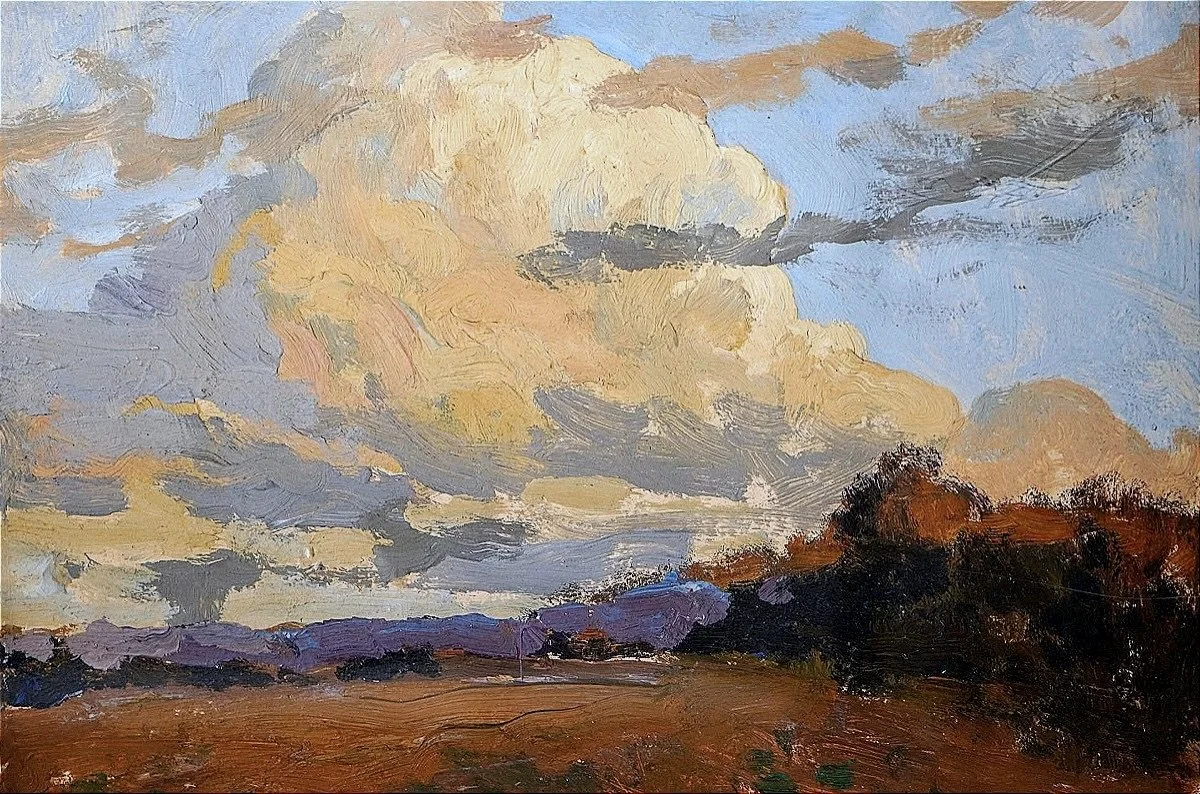
Albert Matignon - The Wonderful Clouds - Landscape Study
VALUE RANGE
Use the full range from dark to light, or at least most of it. Clouds that stay in the middle values tend to look flat. Find your lightest light, usually where the sun hits the cloud directly, and your darkest dark, often the shadowed underneath or a gap of deep sky, and place a few steps in between. Squint at your painting: if you can see clear light, mid, and dark shapes, your values are working.
*There are exceptions to this, such as when clouds are faint or wispy. Let’s focus on this for now, and we’ll get to that later.
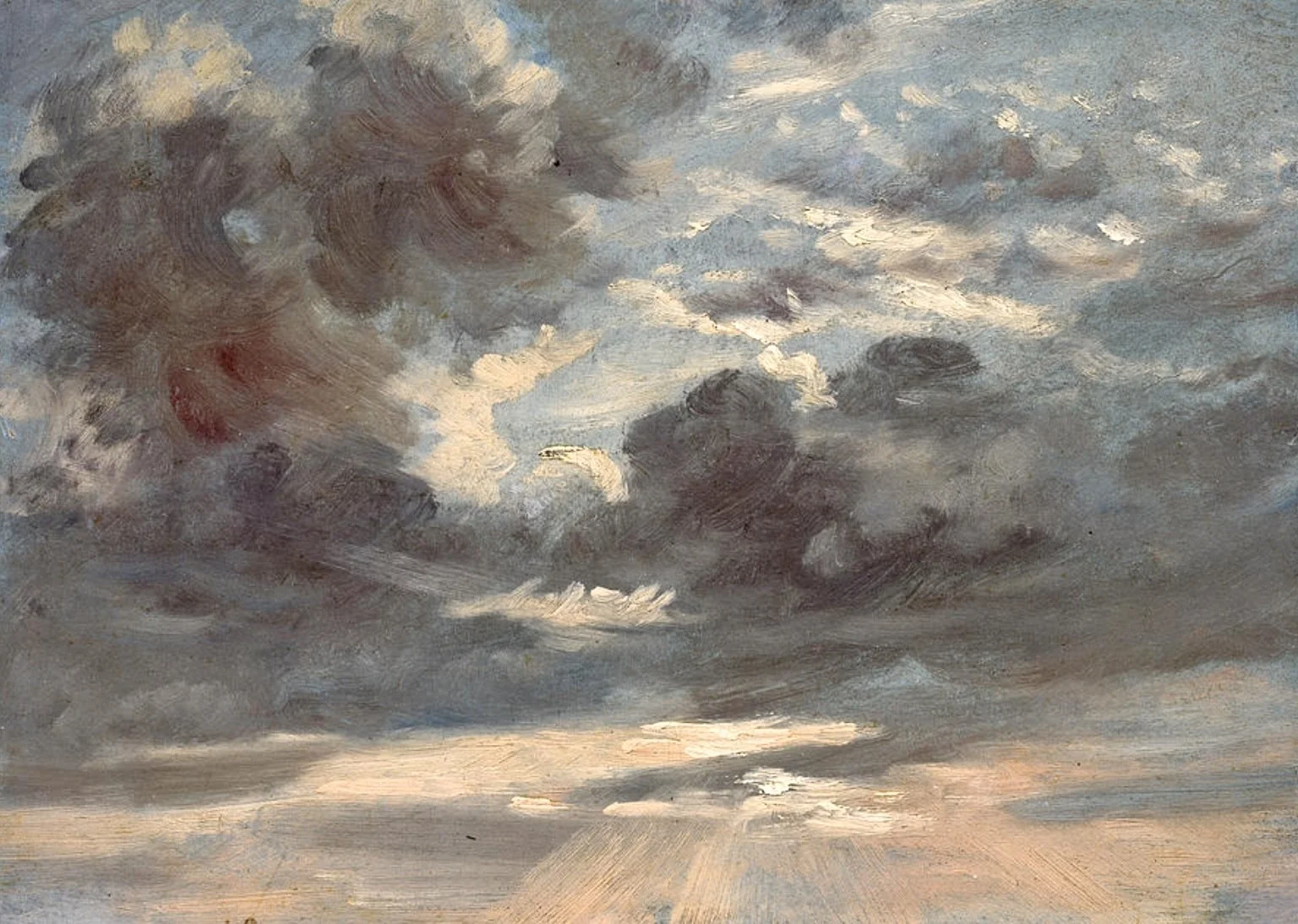
Cloud Study, Stormy Sunset #4. John Constable.
SOFT AND HARD EDGES
A mix of soft and hard edges makes clouds feel real. Hard edges grab attention, so use them where the light is strongest or where a cloud is closest to you. A soft, blended edge (scumbling) lets shapes melt into the sky or pushes them into the distance, so use them where two values meet or where a cloud becomes thin or wispy. If every edge is sharp, the clouds look cut out. If every edge is soft, they look blurry/flat/boring. Overlap your edges and aim to have variety within a single cloud.
CREATING CONTEXT IN THE SKY
A cloud only reads as a cloud when it has something to sit against. Give it a sky with a clear temperature, such as warm gold near the horizon or cool blue overhead. The sky is never all one color.
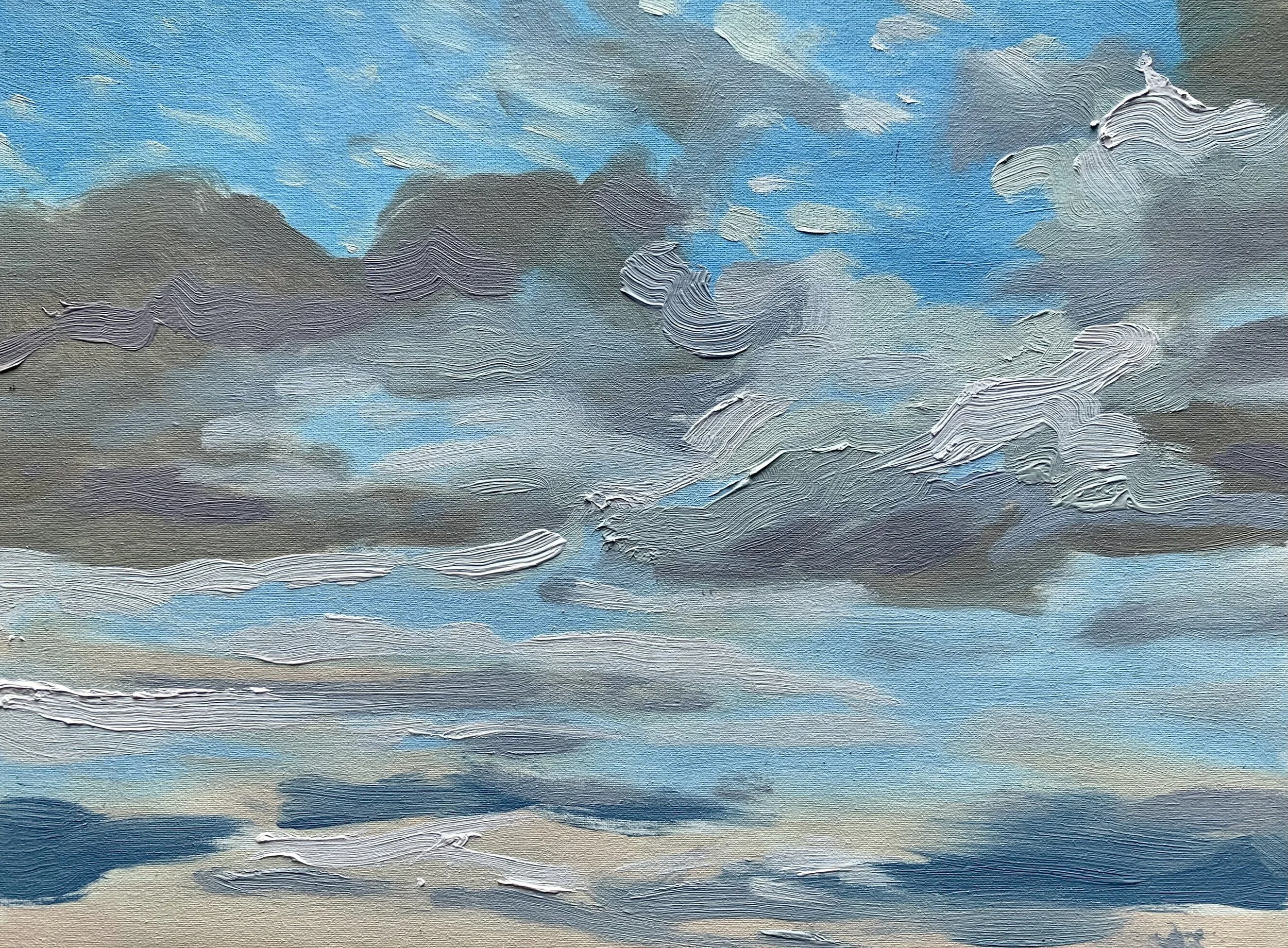
Cloud Study. Adria Moynihan Rusk.
CREATING DRAMA
Drama comes from contrast. Odd, uneven shapes feel more alive than tidy, rounded ones. Make them random, uneven, and a little messy. Add a little impasto (heavy paint) somewhere, or push the purple in the shadows a bit brighter than you see.
A QUICK CHECKLIST FOR YOUR NEXT PAINTING
- Where is my light source coming from?
- Do I have a full range of values, from dark to light?
- Do I have both soft and hard edges?
HOMEWORK (Optional)
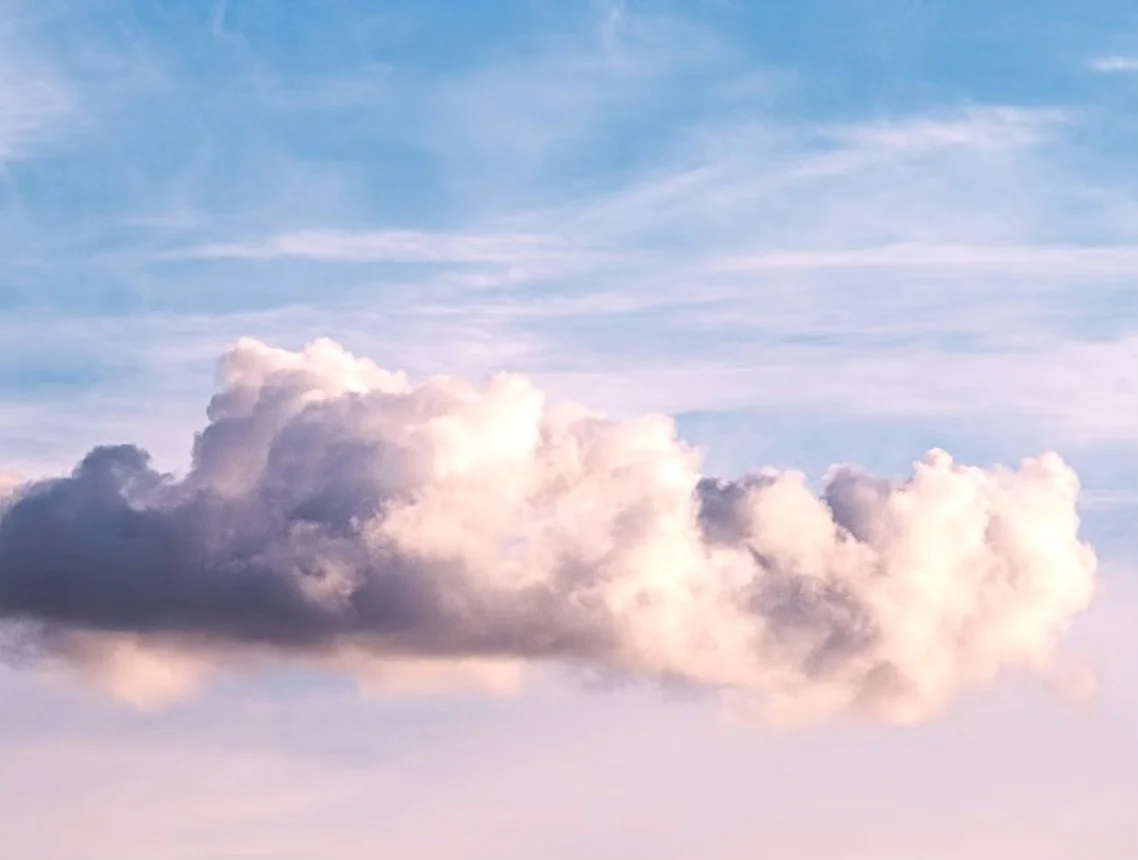
I would love to see what you do with these ideas! If you practice this at home, please bring it to our next session, or send me a photo. Below is a photo reference you can use as inspiration. Remember, the goal isn’t to copy it word for word, it’s to make your own believable impression.